

Elden Ring lives up to its 'open world Dark Souls' promise
Elden Ring lives up to its 'open globe Nighttime Souls' promise
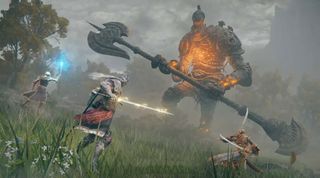
The very showtime enemy I encountered in Elden Band obliterated me. I don't mean that I lost afterward a pitched boxing, or that I made a series of catastrophic mistakes. I hateful that I emerged from a darkened edifice, having completed the bare bones of a tutorial, and an enormous knight rode up and destroyed me with 3 flicks of his lance.
I assumed that this would exist the game's start friendly NPC. Conspicuously, I causeless incorrect. The Tree Watch dispatched with nary an try, and I was dorsum to square 1. Merely I quickly got used to it. Square one is where yous'll spend a lot of time in Elden Ring.
For those who haven't kept up with it, Elden Band is the latest action/RPG by Dark Souls developer FromSoftware. From games are generally difficult, minimalistic and gorgeous, with tight gameplay and atmospheric stories. In that respect, Elden Band is no different. Only what sets this game apart from its predecessors is that information technology takes place in a huge, mostly open world, rather than a series of confined levels.
My time with Elden Ring was short, every bit I played for only a few hours at a time during a network test on the weekend of Nov. xiii. But and then far, the game is shaping upward to exist exactly what the developers promised: an open-world take on the Night Souls formula, with plenty of areas to explore, secrets to uncover and dangerous enemies to fight.
The Dark Souls of open-earth games
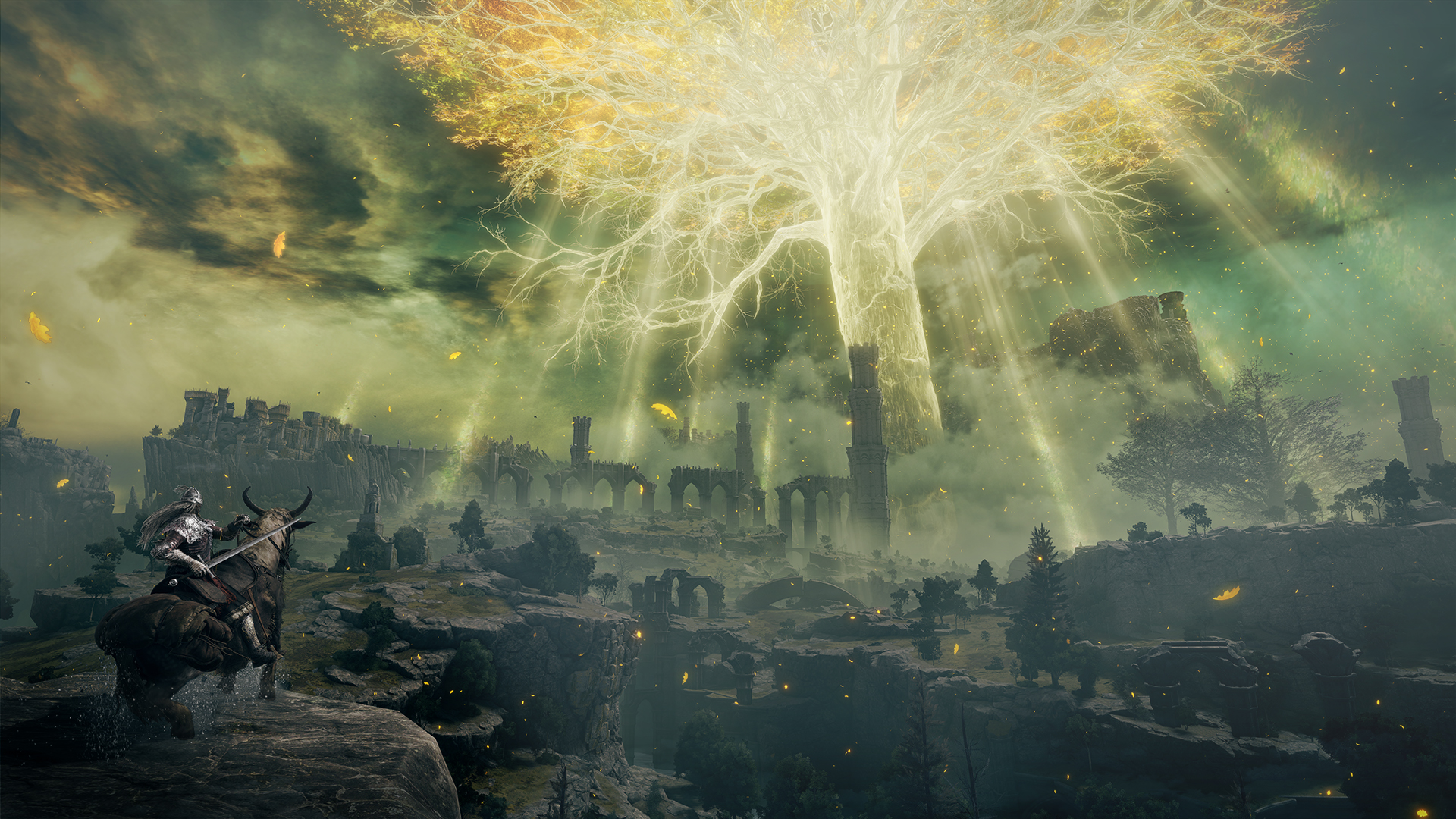
What surprised me nearly almost Elden Ring was that, in spite of its significant structural differences, the moment-to-moment gameplay is most identical to the Souls games that came before it. You'll still choose a grapheme class (I chose one called Encarmine Wolf; this was an enormous mistake), equip weapons and armor, explore every corner of a hole-and-corner-laden earth and do boxing with obscenely tough enemies. Mastering combat is an belittling grind, slowly learning enemy patterns and weaknesses to all-time opponents. You'll also gather resources from fallen foes, which you tin apply as either experience points to improve certain attributes, or currency to buy new gear. Called Runes this time effectually, they're essentially the same as Souls or Blood Echoes.
Where Elden Ring differentiates itself from other "Soulsborne" games is in its world design. When I stepped out of the game's first cavern, a gorgeous grotto brimming with eerie blue lights and glimmering golden copse, I saw a large, verdant field, open in every direction. I could have climbed a nearby hill, doubled dorsum to look behind a crumbling castle or gone far afield to see what lay at the opposite stop of the level. Since the network test lasted just a few hours, I decided to stick to the game'due south suggested path, although, even this was not equally straightforward every bit it seemed.
Afterwards my mauling past the Tree Watch, I decided to steer articulate of enemies until I plant something that looked a fiddling smaller and more manageable. Subsequently finding the game's actual first friendly NPC, I learned that my goal was to infiltrate a castle on elevation of a nearby mount. All I had to guide me was a small gilded sparkle, which points the manner from one Site of Grace to the next. (Sites of Grace are like bonfires. For non-Souls fans, places where you can recover your health potions, access inventory storage, level up and then along.)
Just like previous Souls games, Elden Ring doesn't really tell yous where to go, relying instead on subtle level blueprint and mild hints from NPCs. My outset attempt to climb the mountain and find the castle ended with a significant detour. I found a few undead worshippers milling effectually a cave entrance, and institute that I could take them on easily. The cave wound into the mount, and I reasoned information technology might take me to into the bowels of the castle.
Subsequently fighting my way through a swarm of hard-hitting monsters that looked similar kappa demons, I encountered my first Elden Band boss: the Burial Tree Watchdog. Here, I learned immediate that Bloody Wolf was probably not the right choice to lead me through the early game. While Bloody Wolf characters excel at melee combat, my powerful bounder sword could barely scratch the Watchdog. Furthermore, its unpredictable attack pattern and hard-hitting tail swipes made information technology tough to block or dodge consistently.
Elden Ring, similar the Soulsborne games, also lets you get out messages for other players. Every warning outside of the Watchdog's sleeping room advised me to utilise magic. Even though I had selected a course without magic spells, I could have learned one easily plenty by leveling up and increasing the relevant attributes. Nonetheless, I didn't yet accept the ability to level up, and I was convinced that the Watchdog was the only thing standing in my manner.
Frustration and intuition
In one case I finally bested the Watchdog, however, I had two startling realizations: First, I was no closer to the castle, every bit the only way to continue was to teleport dorsum to the beginning of the dungeon. Second: I still had no fashion to spend all my difficult-earned Runes on leveling up.
That's when I realized how exploration tin exist a double-edged sword in Elden Ring. I had found a worthwhile side activity through careful exploration, and reaped three important rewards: Runes, equipment and the satisfaction of beating a tough boss. (For all we bickering about them, I would wager that most Soulsborne players are here primarily for the bosses.) At the same fourth dimension, I was no closer to accomplishing my goal, and I yet wasn't certain where to go side by side.
Subsequently some more trial and error, including another side dungeon and a few more than ignominious deaths, I finally encountered Melina: a mysterious adult female who could channel my Runes into level-ups. Now, the side dungeons felt a niggling more rewarding, and each death felt a little less harrowing. After all, if I could spend my Runes often, losing a few hundred here and there wasn't most as big of a deal.
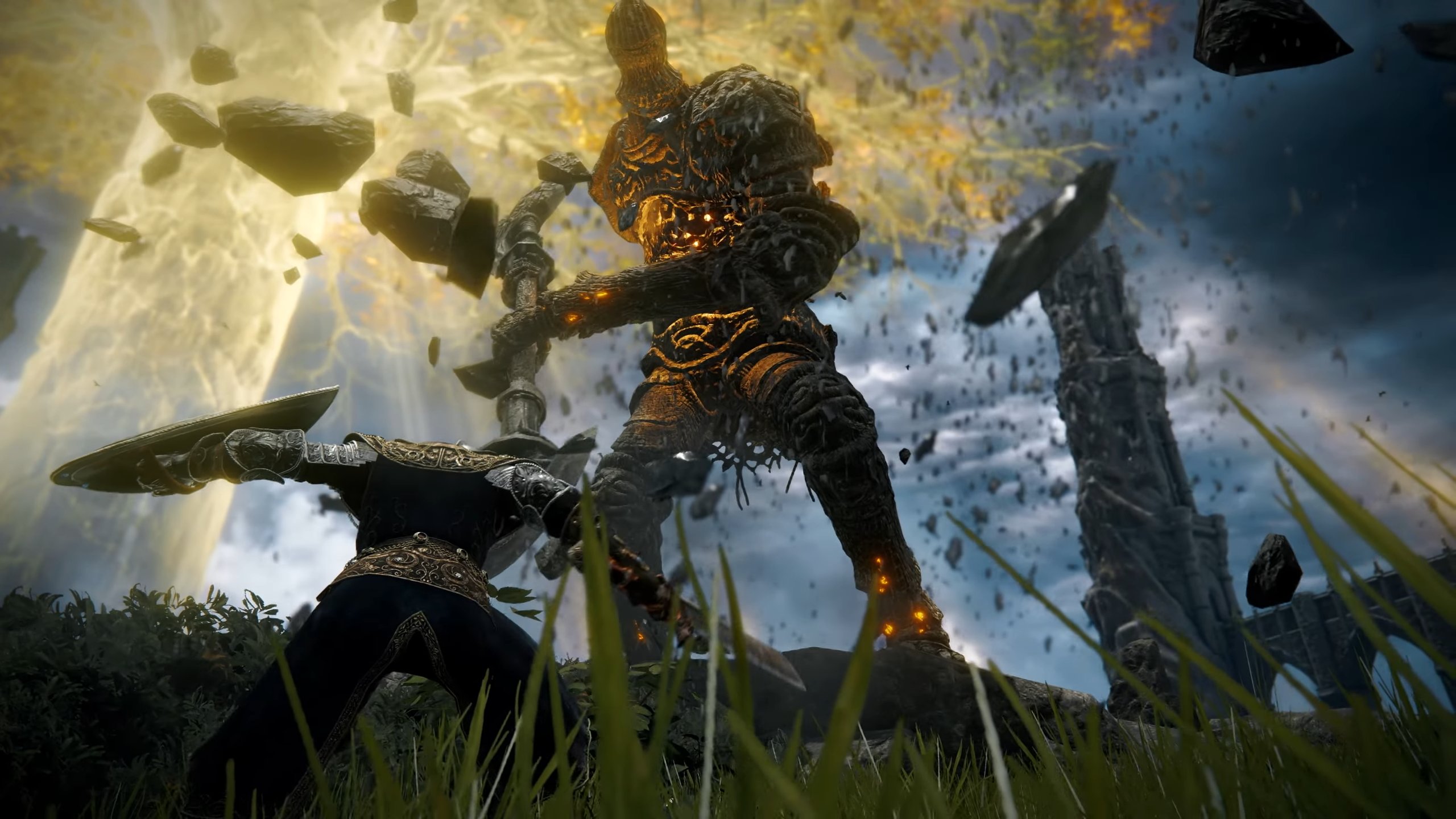
After that, I encountered a few more Soulsborne mainstays: groups of armored knights, an undead giant, a pack of wolves and a few helpful items at abandoned campsites. After finally reaching the castle, however, I encountered the ane obstacle in Elden Band that I couldn't go past: a hideous giant called Margit the Fell Omen.
The boss battle started off tough, as Margit wielded a wicked curved sword, too as blades of light that he could summon at will. Merely effectually halfway through the boxing, he also whipped out a huge hammer, and started jumping around the battlefield, chaining together unpredictable combos that I couldn't consistently block or contrivance.
While Margit was a frustrating fight, it as well reminded me of something I love about the Soulsborne games, something that Elden Ring embraces also. After about a dozen tries, I realized I wasn't going to beat out Margit with animal strength alone. But I remembered that the undead giant I fought had dropped a Smithing Stone Shard: one component that could aid upgrade my sword. Earlier in my travels, I had come across an anvil, which would allow me to upgrade my sword to +3 (annihilation by that would require a blacksmith).
I realized, belatedly, that the game had already given me my big hint on how defeat Margit. I had all the knowledge I needed; all I had to practise was utilize a little perseverance. Then I started hunting giants, upgrading my weapon and attributes each fourth dimension I gathered enough runes. Later on about an 60 minutes, I was much more powerful than before, prepare to accept on Margit again.
The network test ended while I was halfway through my battle with him, kicking me back to the principal card and rendering all my hard work moot.
Withal, Margit will notwithstanding be there when Elden Band debuts on PS5, PS4, Xbox Serial Ten, Xbox Series S, Xbox One and PC on Feb. 25, 2022. And this time, I think I'll be able to come up prepared.

Source: https://www.tomsguide.com/hands-on/elden-ring
Posted by: goodwincrishere.blogspot.com
0 Response to "Elden Ring lives up to its 'open world Dark Souls' promise"
Post a Comment